Social Performance
Commitment / management guideline
Create culture of safety in the workplace
The Company operates comprehensive and effective safety management to ensure good health of all employees, working in safe environment, and also systematically complies with Occupational Safety, Health and Environment Act, B.E. 2554, in consistent with the law and international standards.
Social Policies

Occupational Health and Safety
Target


Management Guideline
The Company operates comprehensive and effective safety management to ensure the good health of all employees, working in a safe environment, and also systematically complies with the Occupational Safety, Health and Environment Act, B.E. 2554, in accordance with the law and international standards.
Occupational Health and Safety Governance
Corporate Level
The Company oversees safety matters at the Board of Directors level, with safety performance reviewed on a monthly basis. The Chief Executive Officer (CEO) serves as the senior executive responsible for oversight, supported by representatives from relevant functions.
The review covers information from audits and inspections, incident investigations, safety performance indicators, operational data, and risk management. The results are used to support decision-making, establish preventive and corrective measures, and continuously improve the Company’s safety management system and performance.
Operational Level
The Company has established an Occupational Safety, Health and Working Environment Committee at each operational site. The committees are responsible for reviewing and providing recommendations on occupational health and safety measures and practices, as well as monitoring safety plans, programs, and audit results. Meetings are held on a monthly basis.
In addition, the Company appoints occupational safety officers at management and supervisory levels at each operational site to promote, support, oversee, and monitor safety operations in accordance with established plans and measures. They also follow up on corrective actions and safety recommendations to prevent and mitigate operational risks.
Operating Results
Health and Safety Impact Mitigation Targets and Action Plan
| 2025 Performance | Short-term Target (by 2026) | Medium-term Target (2027–2032) | Long-term Target (2033–2041) |
|---|---|---|---|
| Indicator: LTIFR – Employees | |||
| 2.30 | Reduce LTIFR by 10% from the current rate each year | Reduce LTIFR by 10% from the current rate each year | Strive toward Zero Accident |
| Indicator: LTIFR – Contractors | |||
| 1.83 | Reduce LTIFR by 10% from the current rate each year | Reduce LTIFR by 10% from the current rate each year | Strive toward Zero Accident |
LTIFR Improvement Plan
- Implement safety action plans
- Identify hazards and assess risks to determine preventive measures
- Conduct safety promotion activities
- Communicate and raise awareness of safety on an ongoing basis
- Provide personal protective equipment appropriate to the nature of the work
| 2025 Performance | Short-term Target (by 2026) | Medium-term Target (2027–2032) | Long-term Target (2033–2041) |
|---|---|---|---|
| Indicator: Fatality Rate – Employees and Contractors | |||
| 0 | Maintain Zero Fatality | Maintain Zero Fatality | Maintain Zero Fatality |
| Indicator: Occupational Diseases Rate – Employees and Contractors | |||
| 0 | Maintain Zero Occupational Disease | Maintain Zero Occupational Disease | Maintain Zero Occupational Disease |
| Indicator: Compliance with Applicable Laws, International Standards, and Relevant Organizational Requirements | |||
| 100% | Establish a legal register, assess compliance, and maintain ongoing oversight | Enhance the safety management system by applying ISO 45001 | Obtain ISO 45001 certification for high-risk operational areas |
| Indicator: Safety Day Activities | |||
| Conduct activities to promote and drive a sustainable safety culture across the organization | Increase the number of activities across operational areas by 10% | Conduct activities continuously across all operational areas, with additional initiatives focusing on health and mental health | |
Occupational Safety, Health and Working Environment Statistics
| Item | 2025 | 2024 | 2023 |
|---|---|---|---|
| Total working hours (hours) | 12,423,291.00 | 12,549,986.00 | 4,654,923.00 |
| Total employee working hours (hours) | 4,781,476.00 | 4,891,852.00 | 4,654,923.00 |
| Total working hours of non-employee workers (hours) | 7,641,815.00 | 7,658,134.00 | Data not available |
Employee Occupational Injury and Accident Statistics
| Item | 2025 | 2024 | 2023 |
|---|---|---|---|
| Number of occupational injury or accident cases resulting in lost workdays (cases) | 11 | 6 | 2 |
| Number of employees injured from work-related incidents resulting in at least one lost workday (persons) | 11 | 6 | 2 |
| Number of employee fatalities from work-related incidents (persons) | 0 | 0 | 0 |
Lost Time Incident Rate (LTIR)
| Indicator | 2025 | 2024 | 2023 |
|---|---|---|---|
| Total number of hours worked - Employees | 4,781,476 | 4,891,852 | 4,654,923 |
| Total number of hours worked - Workers | 7,641,815 | 7,658,134 | - |
| Lost Time Injury Frequency Rate (LTIFR) - Employees | 2.30 | 1.43 | 0.43 |
| Lost Time Injury Frequency Rate (LTIFR) - Workers | 1.83 | 1.44 | - |
| Work-related fatalities - Employees | 0 | 0 | 0 |
| Work-related fatalities - Workers | 0 | 0 | 0 |
| Work-related occupational diseases - Employees | 0 | 0 | 0 |
| Work-related occupational diseases - Workers | 0 | 0 | 0 |
Incident Investigation Report
| Group of Event | Cases | Event Classification - Hazard | Cases |
|---|---|---|---|
| Accident | 11 | Biological | 19 |
| Dangerous Goods | 16 | Chemical | 30 |
| Hazards | 193 | Ergonomic | 2 |
| Near Miss | 0 | Physical | 167 |
| Occupational Illness | 0 | Psychosocial | 1 |
Prevention of Recurring Accidents
- Accident Investigation and Reporting: Analyze root causes to establish corrective and preventive measures, with systematic recording and collection of accident data.
- Risk Assessment and Reduction: Analyze injury-related incidents in 2025 to identify key risk factors and develop accident prevention and reduction plans for 2026.
- Crew Safe Crew Strong Program: In response to accidents identified during cabin crew operations, the 2026 targets include reaching ≥ 90% of cabin crew through safety communications, reducing onboard work-related accidents or injuries by ≥ 50%, conducting safety communications at least once a month, and increasing risk reporting by > 20%.
Employee Health and Well-being Promotion
The Company places importance on preventing and managing health issues that may affect employees, with a focus on creating a safe working environment and promoting employee health and well-being. This is supported through risk assessment, preventive planning, health surveillance, and appropriate health measures, covering the following key areas:
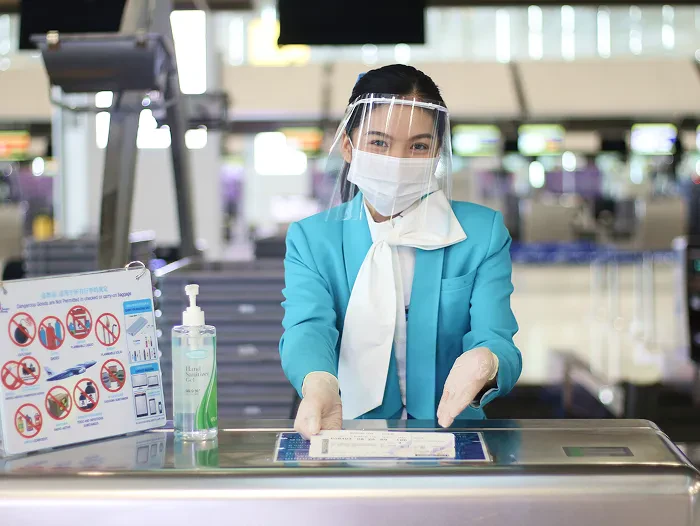
- Communicable Disease Prevention and Control: Implement measures to prevent and control the spread of COVID-19, supported by a dedicated working group responsible for overseeing, planning, monitoring, preventing, and responding to the situation in a systematic manner to minimize risks and impacts on employees and business operations.
- Non-Communicable Disease (NCD) Prevention: Promote awareness of health risk factors, appropriate health behaviors, and personal health management, together with monitoring of relevant health risks.
- Mental Health and Well-being: Promote mental health awareness and care, while fostering a supportive working environment that contributes to employee well-being, quality of life, and work performance.
These approaches reflect the Company’s comprehensive management of health-related risks, encompassing disease prevention, physical health promotion, and mental health care to enhance employee well-being and support sustainable business operations
Occupational Safety, Health, and Working Environment Training in 2025
100% of employees completed the mandatory OSH Training, comprising seven courses:
- Working at Height Safety — 30 employees
- Confined Space Safety — 56 employees
- Forklift Safety — 15 employees
- Occupational Safety, Health, and Working Environment Committee — 27 employees
- Supervisory-Level Safety Officer — 22 employees
- Management-Level Safety Officer — 18 employees
- Basic Firefighting — 77 employees
100% of employees completed the General Training, comprising two courses:
- First Aid and Basic Life Support — 78 employees
- Use and Inspection of Fall Protection Equipment for Working on Aircraft Wings — 55 employees.

Compliance with Occupational Safety, Health and Working Environment Laws
The Company complies with applicable laws, regulations, and requirements related to occupational safety, health, and working environment management. Activities include the development of occupational safety management systems, enhancement of safety knowledge and personnel capabilities, implementation of prescribed safety standards, monitoring and performance assessment, as well as regular management reviews to continuously improve workplace practices. In 2025, compliance performance was achieved at 100%.
Explore More
Employee Development and Retention
Target 2025


Management Guideline
Key Objective of Human Capital Development
“Enhancing Capabilities, Inspiring Engagement, and Strengthening Employee Retention — Connecting Happiness at Work to Drive Sustainable Organizational Growth”
The Company is committed to continuously developing employee capabilities under the “Connect Your Happiness” philosophy to promote quality of life and sustainable growth for employees at all levels. Learning and development programs are provided through both internal and external training opportunities, covering employees from entry level to executive management.
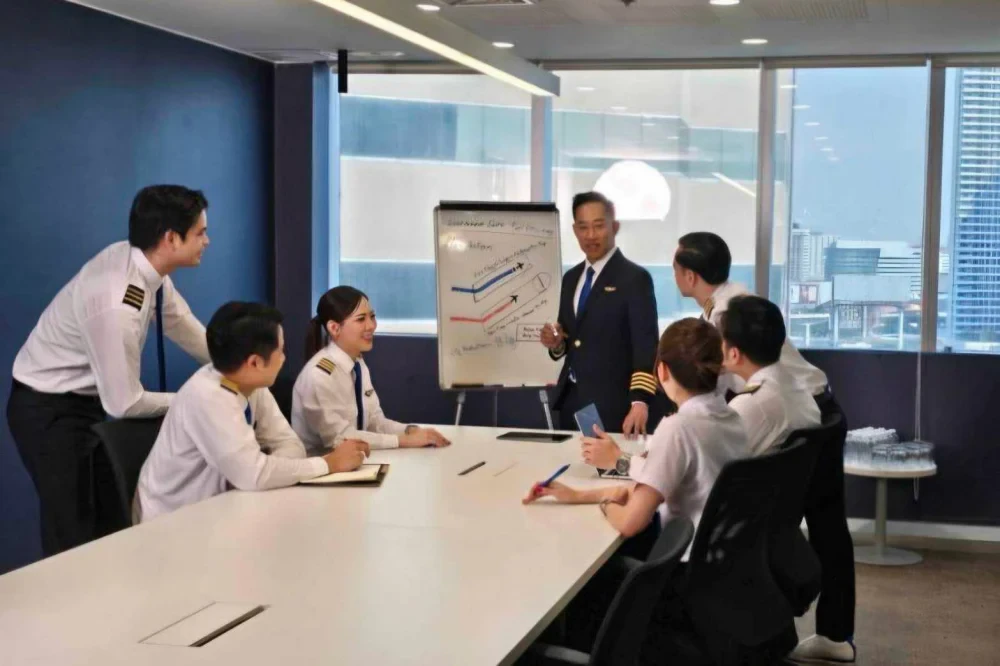
The Company has also established the Bangkok Airways Training Development Framework to support the development of skills and competencies aligned with organizational direction through four key components: Core Competencies, Corporate Values, Leadership Competencies, and Functional Competencies.
Operating Results
Human Capital Development
Average training hours per person per year
Unit: Hours


Promoting ESG Knowledge and Fostering a Sustainability Culture
In 2025, employees from various business functions participated in Self e-Learning programs under the ESG DNA initiative organized by the Stock Exchange of Thailand. The programs included:
ESG in Action Program
Circular Economy (Circular Business Model) Program
Value Chain Analysis Program
ESG Risks Program
Skills Development and Collaboration with Educational Institutions
The Company promotes the development of knowledge and skills relevant to the aviation industry through collaboration with educational institutions and training organizations, with the aim of supporting practical learning and preparing individuals for careers in the aviation industry. Key initiatives include:
Collaboration with Educational Institutions: The Company has signed Memoranda of Understanding (MOUs) with five educational institutions: Sripatum University, Chandrakasem Rajabhat University, Naresuan University, Bangkok University, and Princess of Naradhiwas University. These collaborations support students’ practical learning and provide opportunities to share knowledge and experience with faculty members and students, helping them better understand different job functions and make informed decisions when selecting internship placements within the Company.
Pilot Training Collaboration: The Company collaborates with Bangkok Air Aviation Training Center Co., Ltd. (BATC) on the Type Rating Support Program (TRSP) for ATR 72-600 aircraft, supporting the development of specialized knowledge and skills for aviation personnel.
Internship Program
The Company offers internship opportunities to students throughout the year, covering both office-based functions and passenger service-related roles. The program provides participants with opportunities to gain practical work experience and workplace exposure prior to graduation.
Before commencing their internships, participants are provided with information about the Company, as well as relevant policies and practices, including confidentiality, personal data protection, and information technology usage. This helps enhance their understanding and readiness for the workplace while supporting informed career choices in the future.
The Company promotes internship opportunities through various channels, including social media, career booths at educational institutions, and employee-led career talks that provide students with information about job functions and career opportunities, helping them gain a better understanding of internships and careers in the aviation industry.
Fair Labor Practices
The Company recognizes that employees are a key resource in driving the organization forward. The Company is therefore committed to fair treatment, equality, diversity, and non-discrimination. Employment decisions are based on knowledge, capabilities, experience, and suitability for the role, without discrimination based on race, nationality, religion, gender, age, sexual orientation or gender identity, disability, or other personal characteristics unrelated to job performance. Key practices include:
- Race and Nationality: The Company provides equal employment opportunities to individuals of diverse racial and national backgrounds. The Company currently employs individuals of various nationalities across the organization.
- Religion and Belief: The Company respects employees’ freedom of religion and supports appropriate religious practices, including providing prayer rooms at operational sites.
- Gender and Sexual Diversity: The Company promotes equal opportunities for employees of all genders, including LGBTQ+ employees, in employment, compensation, and career advancement.
- Age Diversity: Employment opportunities are based on capabilities, experience, and suitability for the role, without discrimination based on age.
- Persons with Disabilities: The Company provides equal employment opportunities for persons with disabilities and supports their occupational opportunities in accordance with Section 35 of the Empowerment of Persons with Disabilities Act, with the aim of promoting income generation and self-reliance.
Operating Results 2025
(Data as of 31 December 2025)
| Detail | 2025 | 2024 | 2023 | |||
|---|---|---|---|---|---|---|
| Male | Female | Male | Female | Male | Female | |
| Employment Data | ||||||
| Total employees (persons) | 2,304 | 2,339 | 2,291 | |||
| Employees (persons) | 1,078 | 1,226 | 1,137 | 1,202 | 1,134 | 1,157 |
| Employees by Age Group | ||||||
| Employees aged below 30 years (persons) | 163 | 273 | 184 | 251 | 183 | 226 |
| Employees aged 30–50 years (persons) | 773 | 856 | 821 | 866 | 830 | 856 |
| Employees aged over 50 years (persons) | 142 | 97 | 132 | 85 | 121 | 75 |
| Employees by Position Level | ||||||
| Operational-level employees (persons) | 694 | 1,021 | 757 | 999 | 741 | 962 |
| Management-level employees (persons) | 374 | 197 | 370 | 194 | 382 | 186 |
| Executives (persons) | 10 | 8 | 10 | 9 | 11 | 9 |
| Employees Working in Thailand | ||||||
| Total employees working in Thailand (persons) | 1,065 | 1,202 | 1,123 | 1,177 | 1,120 | 1,134 |
| Bangkok and Vicinity (persons) | 887 | 940 | 880 | 911 | 883 | 883 |
| Northern Region (persons) | 50 | 45 | 19 | 32 | 18 | 34 |
| Central Region (persons) | 0 | 0 | 32 | 11 | 33 | 10 |
| Northeastern Region (persons) | 0 | 0 | 0 | 0 | 0 | 0 |
| Southern Region (persons) | 91 | 195 | 181 | 200 | 157 | 186 |
| Eastern Region (persons) | 37 | 22 | 31 | 23 | 29 | 21 |
| Employees Working Overseas | ||||||
| Total employees working overseas (persons) | 37 | 39 | 37 | |||
| Employees working overseas (persons) | 13 | 24 | 14 | 25 | 14 | 23 |
Note
1) The Company’s workforce structure primarily consists of permanent employees to ensure consistent standards in human resource management, employee development, and welfare provision across the organization.
2) Based on current data, the Company has no employees who identify as persons with disabilities, representing 0% of the total workforce. Nevertheless, the Company places importance on respecting human rights, promoting equality, and ensuring non-discrimination in employment. The recruitment and selection process is based on candidates’ qualifications, capabilities, and suitability for the role, without discrimination on the grounds of disability or other personal characteristics unrelated to job performance.

Remuneration and benefits
The Company’s Remuneration Payment Policy is fair and competitive in the labor market, helping to create career stability for employees and fair opportunities for career advancement. In addition, the Company provides various employee welfare benefits as required by law, such as social security, as well as benefits beyond legal requirements. These include medical expenses, life insurance, health insurance, air tickets, annual medical check-ups, vaccinations, contributions in the event of the death of employees or their parents, and discounted medical fees for employees and their families when using services from hospitals in the Company group network. Other voluntary welfare benefits are also provided to employees, such as a savings cooperative, provident fund, and housing loans in partnership with commercial banks.
In 2025, the Company provided employee remuneration and compensation, including salaries, wages, overtime pay, provident fund contributions, and other employee welfare and benefit expenses, totaling approximately THB 3,016,039,548.89.
The Company ensures that all employees receive wages at or above the minimum wage prescribed by law, with the Company’s starting wage rates set above the statutory minimum wage. The Company determines its compensation and benefits structure based on job level, knowledge, capabilities, responsibilities, and performance. Employees performing work of equal value and at equivalent job levels receive compensation and benefits under the same framework and standards, without discrimination. The Company periodically reviews its wage and salary structures to ensure that compensation remains appropriate, fair, and supportive of employees’ well-being. Wage practices comply with the minimum wage rates announced by the Ministry of Labour, as well as the Company’s Code of Conduct and human resource management regulations, with relevant information reported to the appropriate labor authorities as required.
Promoting Savings Channels and Financial Security
The Company established a Provident Fund and Cooperative Savings to promote saving and provide financial security for employees. As of 31 December 2025, the proportion of employees who joined the Provident Fund compared to the total number of employees is as follows:
Operating Results 2025

Total number of employees

Number of employees participating in the Provident Fund

Proportion of employees participating in the Provident Fund
Freedom of Association and Employee Participation
The Company respects and supports employees’ rights to freedom of association, expression, and participation in discussions concerning employee welfare and working conditions. In accordance with the Labour Protection Act B.E. 2541 (1998), as amended, the Company has established Employee Welfare Committees as a mechanism for receiving and reflecting employees’ views and suggestions, as well as facilitating discussions with the Human Resources Department and management to consider and develop appropriate and fair employee welfare and working conditions within the framework of applicable laws and regulations.
The Company respects employees’ rights, without discrimination or inappropriate interference, and continuously promotes communication and engagement between employees and management through this mechanism.
The Company has Employee Welfare Committees at six locations, with five members at each location, covering the Head Office, Bangkok Station (Suvarnabhumi Airport and Thapsuwan Building), Samui Station, Phuket Station, Don Mueang Station, and Trat Station.
2025 Performance: The Company held Employee Welfare Committee meetings on a quarterly basis, totaling four meetings, providing opportunities for ongoing discussions and employee input on welfare and working conditions.
Working Hours and Overtime
The Company places importance on employees’ quality of life, health, and safety by establishing rules and practices on working hours and overtime in compliance with applicable labor laws, as follows:
- Regular Working Hours: The Company ensures that employees’ regular working hours are within the limits prescribed by applicable laws.
- Overtime Work: Where overtime is necessary, the Company has established practices to protect employees’ rights, health, and safety, as follows:
- Necessity and Voluntary Consent: Overtime work is performed only when necessary for operational requirements and must be assigned by a supervisor and agreed to by the employee. The Company does not have a policy of requiring employees to work overtime without their consent.
- Overtime Limits: The Company monitors and controls overtime hours to ensure they do not exceed 36 hours per week, in accordance with applicable laws.
- Rest Periods: Where employees are assigned to work overtime for at least two consecutive hours following regular working hours, the Company provides a rest period of at least 20 minutes before overtime begins to support employee health and safety.
Prevention of Excessive Working Hours
In addition to complying with applicable labor laws, the Company places importance on preventing and reducing excessive working hours to promote employee health, safety, and work-life balance. The Company adopts the following approaches:
- Workforce and Shift Management: The Company plans and allocates workforce resources according to the workload of each function, particularly operational functions, to ensure an appropriate distribution of workload and reduce the need for overtime. Workforce requirements are also reviewed annually.
- Workload Monitoring and Management: Supervisors are responsible for regularly monitoring and assessing employee workloads. Where employees are required to work overtime on a continuous basis, supervisors consider appropriate measures, such as redistributing workloads or improving work processes. If the workforce is found to be insufficient for the actual workload, supervisors may submit a request to the relevant functions for consideration of additional staffing. This approach helps reduce excessive working hours and prevent accumulated employee fatigue.
Labor Rights Protection and Responsible Employment
The Company places importance on protecting employees’ rights and promoting responsible employment practices. The Company operates in accordance with applicable labor laws and its internal regulations, while establishing measures to prevent and mitigate potential labor-related impacts arising from its business operations, as follows:
- Managing Employee Impacts from Business Changes: When significant operational changes occur, the Company considers potential impacts on employees and appropriate measures to minimize such impacts prior to implementation. For example, where an operational station needs to be closed, affected employees are given opportunities to apply for vacant positions within the Company through the internal recruitment process, supporting employment continuity and providing opportunities for employees to continue their careers and grow with the Company.
- Prevention of Child Labor: The Company’s work regulations require applicants for all positions to be at least 18 years of age. Identity documents are also verified during the recruitment process to prevent the employment of child labor.
- Prevention of Forced Labor and Human Trafficking: The Company prohibits all forms of forced labor and human trafficking. Employment is based on voluntary consent, and all employees have the right to terminate their employment or resign in accordance with the procedures set out in the Company’s work regulations.
In 2025, the Company identified no incidents or cases of non-compliance with labor standards and applicable labor laws. Therefore, there were no cases requiring corrective action or remediation. Nevertheless, the Company remains committed to strict compliance with labor standards and applicable laws, with the Human Resources Department responsible for continuously overseeing, monitoring, and preventing labor-related risks.
Prevention and Management of Workplace Bullying and Harassment
The Company places importance on the prevention and management of workplace bullying and harassment. The Company plans to provide relevant training and information to newly appointed employees at the management level and above to enhance their knowledge, understanding, and awareness of applicable policies, as well as appropriate procedures for receiving and handling reports or cases of bullying and harassment.
Employee Happiness 2025
The 2025 assessment results indicated that the Company’s employees achieved an average Health & Well-Being score of 60.0. The highest average score was recorded in the Physical Health dimension at 65.1, while the Mental Health dimension recorded the lowest average score at 52.6. Overall, the scores were classified as being at a “High Level of Health & Well-Being” (scores between 50.00–74.99 according to the assessment criteria). In addition, the overall employee engagement score was 60.7, which falls within the range of 50.00–74.99, reflecting a “High Level of Employee Engagement.” The highest average score was recorded in the “Say” dimension, representing positive advocacy toward the organization, at 66.5. Meanwhile, the “Stay” dimension, representing employee loyalty and intention to remain with the organization, recorded the lowest average score at 51.6.

Employee Engagement
Voluntary Employee Turnover
(Data as of 31 December 2025)
| Item | 2025 | 2024 | 2023 |
|---|---|---|---|
| Total voluntary employee turnover (persons) | 217 | 137 | 155 |
| Male employees voluntarily resigned (persons) | 131 | 64 | 69 |
| Female employees voluntarily resigned (persons) | 86 | 73 | 86 |
| Voluntary employee turnover rate (%) | 9.42 | 5.86 | 6.77 |
Remark:
- In 2025, of the 131 male employees who resigned, 70 employees transferred to affiliated companies as part of the rights transfer process under the airport operating certificate requirements of the Civil Aviation Authority of Thailand (CAAT).
- In 2025, of the 86 female employees who resigned, 25 employees transferred to affiliated companies as part of the rights transfer process under the airport operating certificate requirements of the Civil Aviation Authority of Thailand (CAAT).
Employee Engagement and Satisfaction Enhancement Plan
The Company has established a plan to enhance employee experience and strengthen employee engagement by fostering a workplace environment that supports well-being, happiness, and sustainable career growth under a people-centric approach to human resource management.
This plan encompasses talent development, physical and mental well-being initiatives, an open and inclusive workplace culture, employee participation, and work-life balance support, enabling employees to perform effectively while maintaining a positive work experience.
Key initiatives include career development and skills enhancement programs, leadership development, internal knowledge-sharing activities, health and wellness programs, employee recognition initiatives, and ongoing communication channels for employees to provide feedback, suggestions, and raise concerns. These efforts aim to promote meaningful two-way communication between management and employees.
In addition, the Company will monitor and evaluate the effectiveness of these initiatives through Employee Engagement Surveys and relevant human capital analytics. Insights gained will be used to continuously improve people management practices and foster a workplace where employees feel valued, motivated, and empowered to grow alongside the organization.
The Company believes that engaged employees with positive workplace experiences are essential to delivering service excellence, maintaining high safety standards, and supporting the Company's long-term sustainable growth.

Community Engagement
Target 2025


Management Guideline
At the heart of sustainable development is progressing together with the community.
Bangkok Airways implemented community engagement in three main target areas around the Company’s airports in Samui, Sukhothai, and Trat, using a holistic area-based community development approach that takes into account economic, social, educational, environmental, and health aspects according to the appropriateness of the local context.
Operating Results
Explore MoreWing of Dreams
The “Wings for Dreams” initiative was established to provide youth with opportunities to learn about careers as pilots and in the aviation industry. The project also serves as part of the Company’s efforts to enhance awareness and recognition of its airports among local communities and educational institutions.
The initiative consists of two key activities:
- Career orientation sessions for secondary school students
- Airport Tour activities for primary school students

Activity 1: Firefighting Career Orientation Program
- Samui Airport organized an activity to provide youth with opportunities to learn about airport operations, aircraft firefighting careers, and basic fire survival skills at Theeparatpittaya School, with a total of 120 participants.
- Trat Airport organized an activity to provide youth with opportunities to learn about airport operations, aircraft firefighting careers, and basic fire survival skills at Satri Prasertsil School, with a total of 350 participants.

Activity 2: Airport Tour Program at Sukhothai Airport
The Airport Tour Program at Sukhothai Airport was organized to provide youth with opportunities to learn about Sukhothai Airport, pilot careers, and cabin crew professions. Participating students engaged in learning activities across various stations, including:
- Station 1: Airport Tour — learning about the check-in counter area, runway operations, and airport firefighting services
- Station 2: Learning about the roles and responsibilities of cabin crew personnel
- Station 3: Learning and participating in flight simulation training within a flight simulator room
A total of 36 teachers and students from Wat Tha Chang School participated in the activity.
Promoting Employee Engagement
The Company promotes employee participation in social and community activities through various programs and initiatives, including:
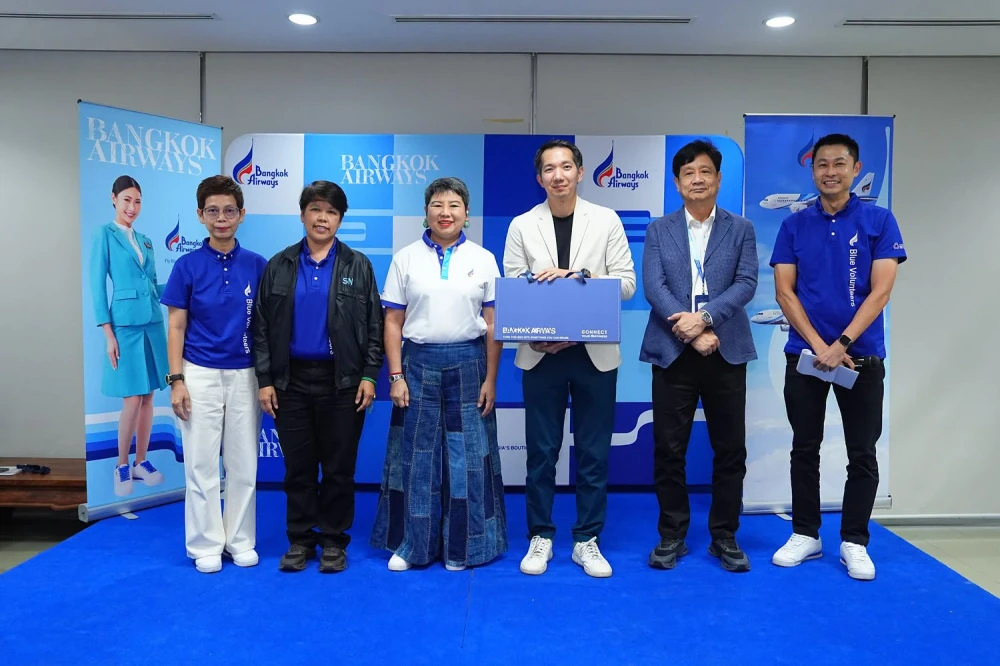
- Blue Volunteers Employee Volunteer Program: Provides opportunities for employees to participate in social and community activities, including those in communities surrounding Samui, Sukhothai, and Trat Airports. In 2025, a total of 221 employee volunteers participated in the activities. For 2026, the Company has set a target of at least 400 participating employees.
- Blood Donation Activities: Encourages employees to contribute to society through blood donation activities in collaboration with the Thai Red Cross Society. In 2025, the Company organized four blood donation activities, with a total of 133 participants.

Supporting Persons with Disabilities
The Company continuously implements its policy on supporting persons with disabilities in accordance with Section 35 of the Persons with Disabilities Empowerment Act. In 2025, the Company received approval from the Bangkok Employment Office Area 9 to carry out disability support initiatives by providing financial assistance to persons with disabilities in local communities in Surat Thani Province (Koh Samui), Trat Province, and Sukhothai Province. The support was intended to promote career opportunities and service-based employment, as an alternative to contributing to the Empowerment of Persons with Disabilities Fund.
The Company provided support to a total of 23 persons with disabilities in compliance with legal requirements, based on 2,322 employees contributing to the Social Security Fund as of October 2024, representing the required ratio of one person with disabilities per 100 employees.
Operating Results 2025

The Company provided of financial assistance to

at total of
- Service-based employment for persons with disabilities and caregivers of persons with disabilities: a total of 16 individuals were engaged, with compensation of THB 120,456 per person per year, totaling THB 1,927,296.
- Other forms of assistance: financial support for career development was provided to 7 persons with disabilities and caregivers of persons with disabilities, with support amounting to THB 120,450 per person per year, totaling THB 843,150.
Employment Support for Persons with Disabilities
(Data as of 31 December 2025)
| Category | 2025 | 2024 | 2023 |
|---|---|---|---|
| Total non-employee workers with disabilities (persons) | 23 | 23 | 21 |
| - Service-based employment group (persons) | 16 | 16 | 14 |
| - Other assistance support group (persons) | 7 | 7 | 7 |
Community Investment Linked to Business Strategy
The Company identifies job creation and income generation as one of its key community engagement strategies, focusing on communities surrounding the Company’s airports in Samui, Sukhothai, and Trat, which are the Company’s areas of operation. This approach is linked to the Company’s business operations through support for local economies and the integration of local products and identities into the Company’s services and activities.
Examples of initiatives include the development of upcycled products from seashells in collaboration with communities in Trat through the Super AI Engineer Season 5 project, as well as the procurement of local community products for use in passenger lounges and various Company activities.
Donations and/or Support for Non-Profit Organizations in 2025
- Supported the “Although We Cannot See the Moonlight, We Can Feel the Stars” project organized by the National Astronomical Research Institute of Thailand (NARIT) under the Ministry of Higher Education, Science, Research and Innovation by providing airline tickets for 56 visually impaired students from Thammik Wittaya School, Phetchaburi Province, to visit the 7th Cycle Birthday Anniversary Observatory at Doi Inthanon, Chiang Mai Province.
- Supported the Koh Phangan–Seatran Run for Life fundraising event to procure an endoscopy system and control unit for Koh Phangan Hospital, aiming to enhance the accuracy of medical screening and diagnosis and enable timely treatment.
- Provided support to the Sai Jai Thai Foundation under Royal Patronage.
- Contributed donations to the Foundation for the Better Life of Children under Royal Patronage.
- Supported the provision of consumer goods, bulletproof vests, and anti-drone nets, which are essential equipment for operational support, to the War Veterans Families Relief Foundation under the Royal Patronage of Her Royal Highness Princess Srinagarindra, to assist those affected by unrest along the Thailand–Cambodia border.
- Made donations to three temples located in communities surrounding Samui, Sukhothai, and Trat airports.
- Continued the landscape improvement project surrounding the pond area at Wat Boontharikaram, Koh Samui, which has been implemented since 2018. The project aims to enhance and promote the temple area for community recreational use and Buddhist activities in accordance with the wishes of the temple committee and local community.
- Provided consumer goods to support flood relief efforts in Hat Yai District, Songkhla Province.
- Provided consumer goods to temporary shelters supporting people affected by the Thailand–Cambodia border situation in Trat Province

Human Rights
Target


Management Guideline
The Company respects and promotes the protection of human rights across all business activities by recognizing human rights as a fundamental principle of its operations. The Company complies with applicable laws and internationally recognized standards, including the United Nations (UDHR), the United Nations (UNGP), the United Nations, and the labor principles of the International Labour Organization (ILO).
Human Rights Policy
The Company has established a Human Rights Policy and Human Rights Guidelines, which were approved by the Board of Directors on 24 April 2025, to serve as a framework for preventing and mitigating risks related to human rights violations. The policy applies to the Board of Directors, executives, employees, as well as suppliers, contractors, and stakeholders throughout the value chain.
The Company places importance on non-discrimination, the prohibition of forced labor and child labor, the prevention of all forms of harassment and abuse, and the protection of vulnerable groups.
Human Rights Governance and Responsibilities
The Company has established a clear governance and responsibility structure, with appropriate resources allocated to manage human rights matters across all levels of the organization, as follows:
- Governance Level: The Board of Directors is responsible for approving human rights policies and reviewing human rights performance. The independent directors serve as a direct channel for receiving grievances and oversee the investigation process to ensure fairness and transparency.
- Management and Implementation Level: The Employee Relations team under the Human Resources Department is responsible for conducting fact-finding upon receiving a case from the independent directors and coordinating with supervisors of the relevant functions to address and resolve identified issues.
- Employee Level: Employees at all levels are responsible for understanding and complying with the Company’s Human Rights Policy, as well as remaining vigilant and reporting any incidents that may constitute human rights violations through the channels established by the Company.
Operating Results 2025

No significant incidents of human rights violations.

Human Rights Due Diligence
The Company is in the process of developing and enhancing its Human Rights Due Diligence (HRDD) process in alignment with the United Nations Guiding Principles on Business and Human Rights (UNGP). In 2025, the Company focused on reviewing activities across its business value chain to identify operational scope, relevant stakeholder groups, and human rights issues potentially associated with the Company’s business context. Two cross-functional meetings were conducted with relevant departments as part of this process.
The Company is committed to engaging with all stakeholder groups to jointly identify and understand key human rights issues. To reinforce this commitment, in 2026, the Company plans to conduct a Human Rights Due Diligence (HRDD) assessment across the organization. The process will emphasize engagement with relevant stakeholders and functions to systematically identify human rights risks, which will inform the development of appropriate and effective measures to prevent and address identified impacts.
Communication and Implementation of Human Rights Expectations
The Company is committed to putting its human rights principles and policies into practice by communicating its human rights expectations to relevant stakeholders as follows:
- Employees: The Company communicates its Human Rights Policy and expectations to employees through new employee orientation and internal communication materials to raise awareness, enhance understanding, and promote practices aligned with the Company’s policy.
- Public and Customers: The Company publicly discloses its Human Rights Policy on its corporate website, enabling customers and external stakeholders to transparently access information on the Company’s approach and commitment to human rights.
Future Plan: The Company plans to extend the communication of its human rights expectations to business partners and suppliers by integrating this initiative into the Human Rights Due Diligence (HRDD) process scheduled for 2026. This aims to promote a shared understanding, strengthen human rights practices, and prevent or mitigate potential human rights risks across the value chain.
Grievance Channels and Whistleblower Protection
The Company has established formal grievance procedures and channels in accordance with its Code of Business Conduct to address human rights-related concerns and provide access to all stakeholder groups, as follows:
- Anonymous Internal Reporting Channel: The Company provides the “Tell me more” channel for employees to raise concerns or report incidents without disclosing their identity. Reports are referred to the relevant functions for a fair fact-finding process.
- Reporting Channel for Internal and External Stakeholders: The Company provides an email channel directly to the independent directors for communities, external parties, business partners, and employees, offering an additional accessible and transparent channel for reporting concerns.
- Protection and Confidentiality: Regardless of the reporting channel used, the Company has measures in place to protect complainants. Personal information, where provided, and the content of complaints are subject to restricted access and kept confidential to protect whistleblowers from retaliation or other adverse consequences.
Grievance Mechanism and Management Process
Upon receiving a grievance or concern, whether through the email channel of the Company’s independent directors or directly through the Human Resources Department, the Employee Relations team takes the lead in conducting a fact-finding process. This includes coordinating with supervisors of the relevant functions and gathering information from employees and other relevant parties to ensure that the perspectives of relevant stakeholders are considered comprehensively. The process is conducted in accordance with established procedures in a transparent and fair manner.
Documentation and Continuous Improvement
All stages of consultation, investigation, and fact-finding conducted by the Employee Relations team and relevant functions are systematically documented. The findings and conclusions are used to:
- Resolve Issues and Provide Remediation: The Company is committed to accountability and respect for human rights. Where the fact-finding process determines that the actions of employees or the Company’s operations have caused or contributed to adverse human rights impacts on stakeholders, the Company will take appropriate action to address and mitigate such impacts, including considering appropriate remediation for affected parties. Actions will be determined on a case-by-case basis in a fair manner, proportionate to the severity of the impact, and in accordance with the Company’s regulations and applicable laws. These actions may include disciplinary measures against employees responsible for misconduct, as well as coordination and cooperation with relevant parties to address the issue and appropriately mitigate the resulting impacts.
- Improve Work Processes: Findings and lessons learned from identified cases are used to improve practices and work processes, as well as to reinforce employee awareness to prevent similar incidents from recurring.
Human Rights Impact Assessment and Mitigation
The Company is committed to comprehensively preventing and mitigating human rights impacts. Proactive measures have been established to avoid, prevent, and mitigate potential human rights violations affecting all stakeholder groups, as follows:
- Awareness Raising and Prevention: The Company continuously communicates its Human Rights Policy through internal communication materials, including posters, to ensure that all employees are aware of and understand the policy and adhere to its requirements.
- Grievance Mechanism: The Company provides a grievance channel via email directly to the Company’s independent directors to promote transparency and confidentiality. The independent directors receive and screen reports and coordinate with relevant functions to conduct fact-finding and further investigation in accordance with established procedures.
- Impact Mitigation and Remediation: The Company has established procedures to address potential human rights violations or grievances. Relevant committees are responsible for promptly investigating the facts, taking immediate action to stop activities causing adverse impacts, and determining appropriate and fair remediation for affected parties.
Through these preventive measures, grievance mechanisms, and impact mitigation and remediation procedures, the Company identified no incidents or grievances related to human rights violations arising from its business operations in 2025.
As no incidents or grievances related to human rights violations were identified in 2025, there were no cases requiring response or remediation. Nevertheless, the Company remains committed to maintaining its grievance mechanism and the impact mitigation measures described above as part of its ongoing operating practices, ensuring its readiness to respond to and address any potential issues in a timely manner should they arise in the future.